The Economics of RAG vs. Fine-Tuning in Enterprise AI
In this article
The Great Architectural Debate
You have a massive database of proprietary company knowledge—thousands of PDFs, decades of IT support tickets, and gigabytes of private Slack conversations. You want to build an internal AI assistant that knows everything about your business.
The moment you sit down with your engineering team, you run headfirst into the biggest architectural debate in enterprise AI: Should we use RAG (Retrieval-Augmented Generation), or should we Fine-Tune our own model?
Making the wrong choice here can cost your organization hundreds of thousands of dollars in wasted compute or result in an AI that hallucinates catastrophically. Let's break down the economics and technical realities of both approaches.
What is Retrieval-Augmented Generation (RAG)?
RAG is fundamentally an open-book test.
Instead of forcing the AI model to memorize your company data, a RAG system mathematically converts all your company documents into "vector numbers" and stores them in a Vector Database (like Pinecone or Weaviate).
When a user asks a question, the system acts like a hyper-advanced search engine:
- It searches the Vector Database for the top 5 paragraphs that are most mathematically relevant to the question.
- It grabs those paragraphs and jams them into the prompt.
- The AI reads the paragraphs and generates a clean answer.
The Economics of RAG
- Setup Cost: Very Low. You don't need a massive team of data scientists. Any mid-level web developer can build a RAG pipeline in a weekend using LangChain or LlamaIndex.
- Compute Cost: Extremely Low. Generating embeddings is incredibly cheap.
- Update Speed: Instantaneous. If a product manual changes, you delete the old PDF from the Vector Database and upload the new one. The AI is instantly updated.
- When to use it: When your data changes frequently (daily or weekly), and when factual accuracy is physically more important than "style" or "tone."
What is Fine-Tuning?
Fine-Tuning is fundamentally a closed-book test.
In this approach, you take a base model (like Llama 4 or GPT-4o) and you spend massive amounts of GPU compute forcing the model to read and mathematically internalize your data into its core neural weights.
The Economics of Fine-Tuning
- Setup Cost: Very High. You need highly structured, perfectly clean data (usually thousands of Question/Answer pairs). If you train it on messy data, you get a messy model.
- Compute Cost: High. Renting A100 or Blackwell GPUs to run training loops is expensive.
- Update Speed: Painfully Slow. If your company policies change, the model won't know. To update the model, you physically have to gather the new data and run a new fine-tuning job all over again.
- When to use it: When you need the AI to learn a completely new language, tone, or format that RAG cannot provide. For example, if you want an AI to perfectly mimic the exact writing style of your CEO, or output complex JSON in a highly specific, undocumented proprietary schema, fine-tuning is required.
The 2026 Consensus: The Hybrid Approach
The narrative that "you must choose one" is officially dead. The modern enterprise standard is the Hybrid Approach.
In 90% of business use cases, organizations start by building a robust RAG pipeline because it completely eliminates hallucinations by grounding the AI in facts. Once the RAG system is running, engineers observe the logs. If the AI is struggling to output the responses in the correct format, then they apply a very lightweight Fine-Tuning job to the model.
Essentially: Use RAG for Knowledge (What the AI knows). Use Fine-Tuning for Behavior (How the AI talks).
By separating the architecture, you save hundreds of thousands of dollars in GPU compute and build a system that is infinitely scalable.
Related Reading
Generate Synthetic RAG Test Sets With Ragas
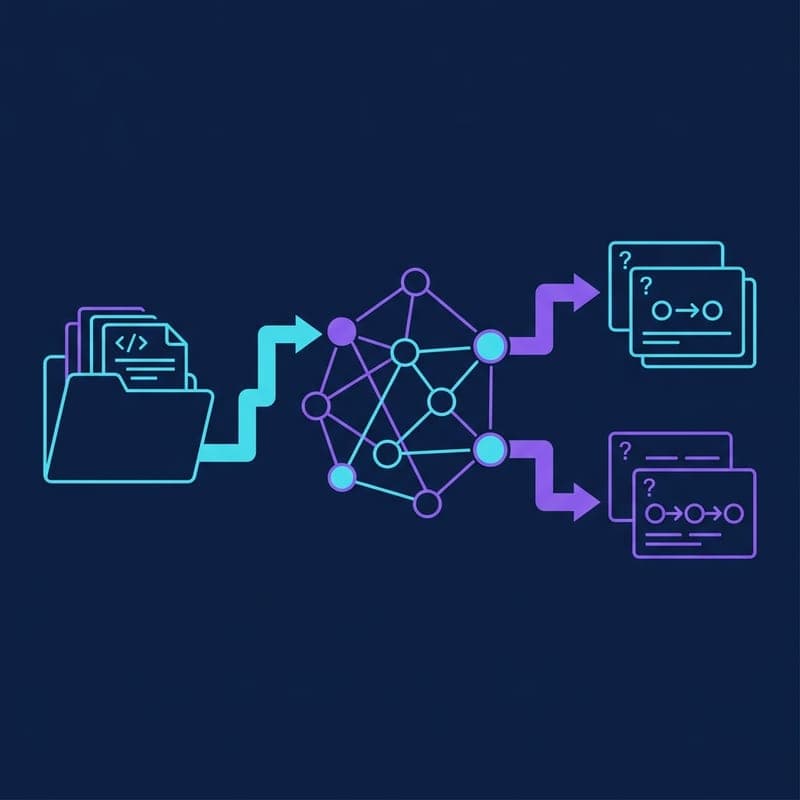
Build, save and reuse a Ragas knowledge graph to generate single-hop and multi-hop evaluation queries from Markdown documents.
Build an Agentic RAG System with smolagents and ChromaDB
Use smolagents CodeAgent to run multi-step retrieval over a ChromaDB vector store, letting the agent plan its own search strategy.
Build a Routed RAG Chatbot with LlamaIndex and Chainlit
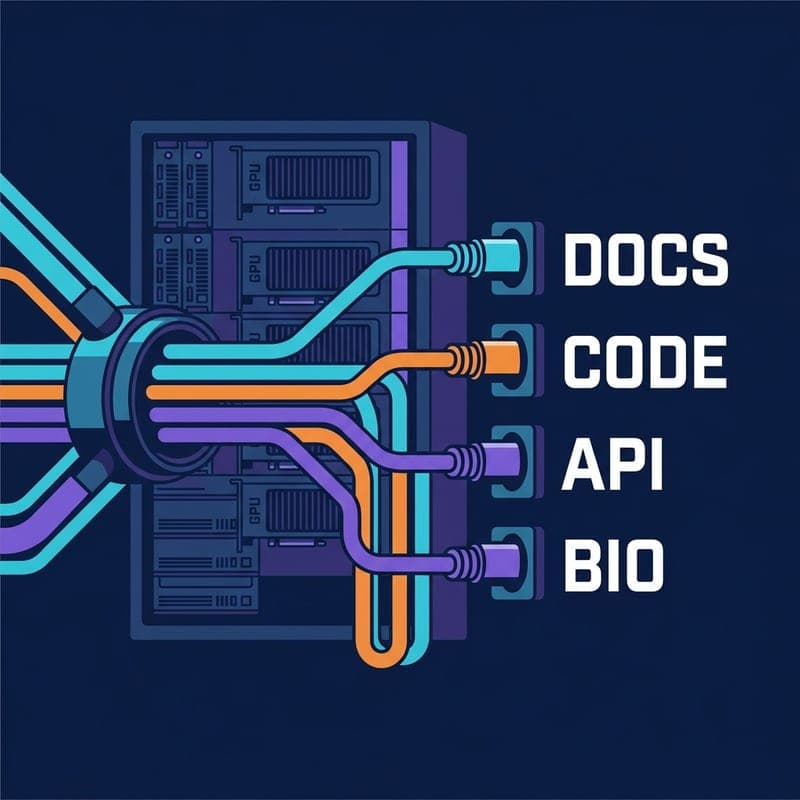
Dispatch queries across independent retrieval pipelines using LlamaIndex QueryFlow, Chainlit, and NVIDIA NIM endpoints.