
In this article
The Monolith is Dead
For years, the golden rule of Artificial Intelligence was "bigger is better." Tech giants poured billions into training massive, monolithic Large Language Models (LLMs) hoping that enough data and compute would eventually spit out an Artificial General Intelligence (AGI). But by early 2026, the computing reality hit a wall: single models hallucinate, forget context over long horizons, and struggle to reliably execute complex tasks.
The solution wasn't a bigger brain. It was a bigger team.
Enter the Agentic Economy—a fundamental architectural shift from single, isolated chatbots to networks of highly specialized, collaborative AI agents.
What is a Multi-Agent System (MAS)?
In a Multi-Agent System, you don't ask a single LLM to write a software program, test it, and deploy it. Instead, you create a virtual workforce:
- The Product Manager Agent: Interacts with the human, gathers requirements, and scopes the project.
- The Coder Agent: Receives the scope and writes the Python scripts.
- The QA Agent: Takes the Coder's script, runs it in a sandboxed terminal, finds errors, and violently kicks it back to the Coder Agent until it passes.
- The DevOps Agent: Takes the verified code and pushes it to an AWS server.
Because each agent has a single, hyper-focused prompt and specific tools (like a terminal, a web browser, or API access), the hallucination rate plummets to near zero.
The Negotiation Protocol
What makes the 2026 breakthrough so profound is cross-platform negotiation. Agents are no longer confined to a single company's internal server. We are seeing the birth of an economy where AI platforms communicate, negotiate, and exchange services autonomously.
If a research firm's specialized Biology AI needs to perform heavy mathematical calculus, rather than attempting to solve the math itself and risking a hallucination, it can dynamically reach out via API to a specialized Mathematics AI running on a different server. It can negotiate the compute cost, receive the verified answer, and return to its biological research.
This M2M (Machine-to-Machine) economy is expanding exponentially, creating decentralized networks of specialized intelligence.
AI as a Scientist: The 2026 Horizon
This agentic shift has pushed AI out of the realm of "text summarizer" and into the realm of "active scientist."
We are currently seeing Multi-Agent Systems generating novel hypotheses, autonomously controlling robotic lab equipment to run physical chemistry experiments, and analyzing the results in real-time. By utilizing self-verification mechanisms—where specialized agents are built entirely to double-check and criticize the work of the primary agents—the scientific community is leveraging AI to accelerate discoveries in material science and virology at a pace impossible for human researchers alone.
Conclusion
If your business is still relying on a simple chat interface where employees type prompts into a single model, you are operating in the past. To survive the next wave of technological disruption, organizations must transition from using AI as a "tool" to managing AI as a "workforce." The agentic economy is here, and it operates 24/7.
Related Reading
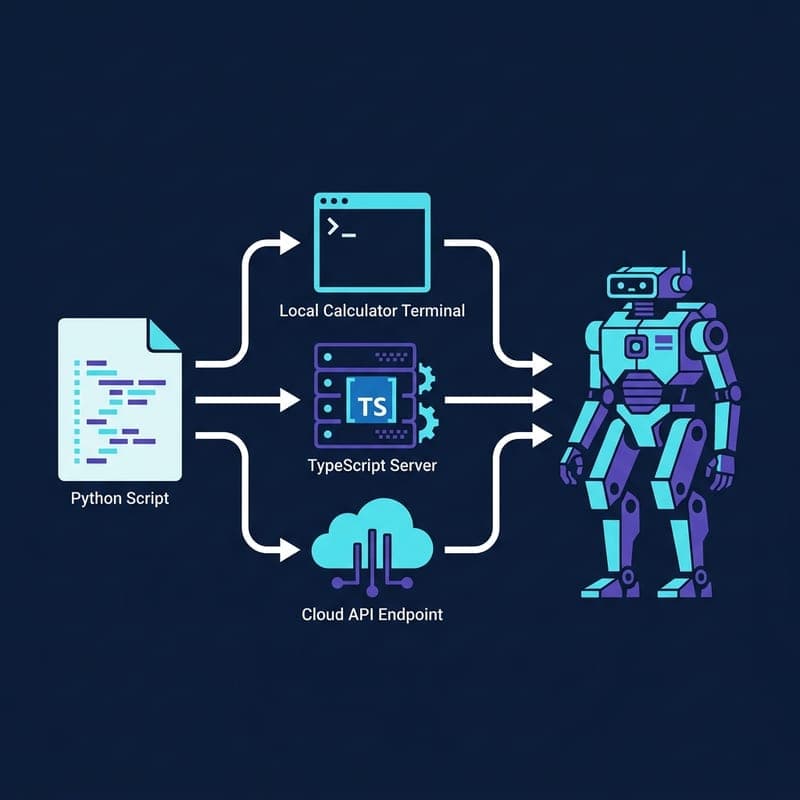
Build a Multi-Tool Claude Agent with MCP Servers in Python
Wire Claude to a local calculator, Brave search MCP server, and Anthropic-hosted tools in one extensible Python agent loop.
Build an Agentic RAG System with smolagents and ChromaDB
Use smolagents CodeAgent to run multi-step retrieval over a ChromaDB vector store, letting the agent plan its own search strategy.
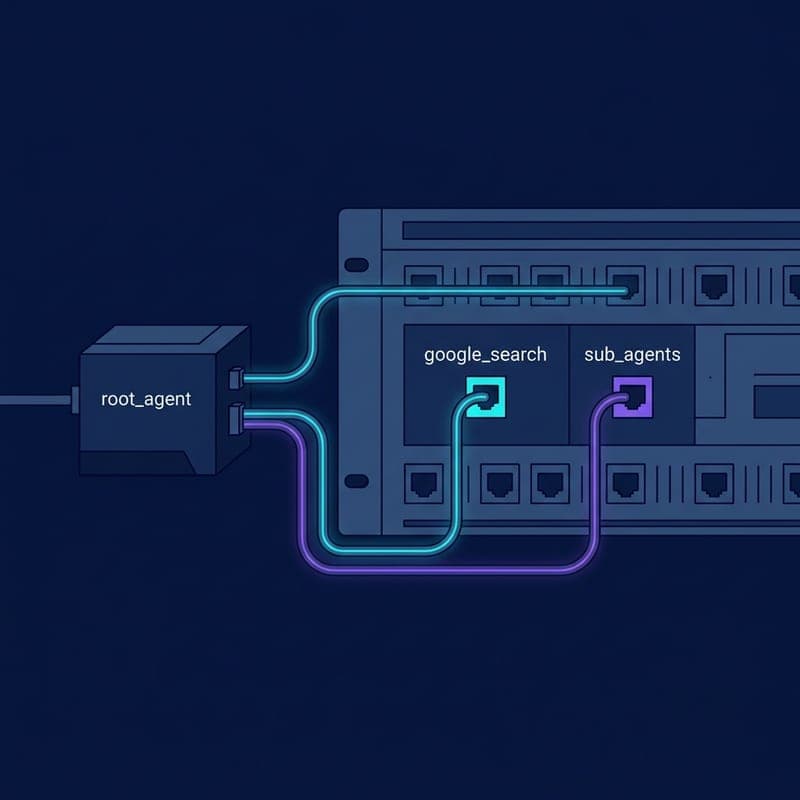
Build a Grounded Search Agent with Google ADK
Build a web-grounded AI agent with Google ADK's built-in google_search tool, from pip install to a grounded answer in the ADK dev UI.