
In this article
Data science is entering a new operating model. For years, the center of gravity was training and tuning models: collect data, build features, optimize metrics, and deploy inference endpoints. That work still matters, but agentic systems are changing what gets built, how it is evaluated, and where value is captured.
In the agentic era, teams are no longer shipping just predictors. They are shipping decision loops: systems that reason over context, call tools, execute actions, and adapt from outcomes.
From Static Predictions to Stateful Decision Systems
Classic ML pipelines are mostly stateless at runtime. Input arrives, a model predicts, and downstream logic handles business rules. Agentic systems are different because they carry memory and planning state across steps.
That adds two architectural demands:
- persistent context stores (short-term + long-term memory),
- orchestration layers that can manage multi-step plans, retries, and tool safety.
The practical impact is big. A fraud model that scores a transaction is one thing; an agentic fraud workflow that gathers evidence, checks policy, drafts escalation notes, and routes to human review is another.
| Dimension | Traditional Data Science | Agentic Data Science |
|---|---|---|
| Primary Output | Prediction score or class label | Actionable plan with executed tool calls |
| Runtime State | Mostly stateless inference | Stateful memory across tasks and sessions |
| Evaluation Focus | Accuracy, F1, AUC | Task completion, safety, cost-to-outcome, handoff quality |
| Failure Handling | Model drift monitoring | Plan failures, tool failures, policy violations, and drift |
The Skill Shift: DS + Systems + Product
The highest-leverage data scientists will increasingly work across boundaries:
- model behavior and prompt controls,
- tool schema design and API contracts,
- orchestration and fallback logic,
- observability for traces, not just predictions,
- policy-aware routing for human escalation.
This is not "data science disappearing." It is data science moving closer to product execution. Teams that can connect model quality to workflow outcomes will outperform teams that optimize only offline benchmarks.
Metrics That Matter in Agentic Workflows
Agentic systems require new scoreboards. Accuracy alone is insufficient when an agent can take several actions before completion.
A more useful metric stack includes:
- task success rate (end-to-end),
- median steps-to-resolution,
- escalation rate to humans,
- policy violation rate,
- cost per successful outcome,
- rollback/rework frequency.
The key idea is alignment between model behavior and business impact. A model can be "smart" and still be operationally expensive if it over-calls tools, loops unnecessarily, or escalates too late.
Why Data Infrastructure Becomes a Strategic Advantage
In a model-centric world, pretraining and fine-tuning dominated the conversation. In an agentic world, the bottleneck often shifts to high-quality operational data:
- event logs rich enough to reconstruct decisions,
- feedback signals tied to real outcomes,
- clean action histories for offline replay and evaluation,
- governed access layers for sensitive systems.
Teams with mature telemetry, lineage, and policy controls will be able to iterate agent behavior much faster than teams relying on ad hoc logs.
Human-in-the-Loop Is Not Optional
The most successful teams are not trying to remove humans from every path. They are designing better interfaces between automation and expert judgment.
For high-risk decisions, human checkpoints should be explicit and measurable:
- confidence thresholds that trigger manual review,
- explanations grounded in retrieved evidence,
- reversible actions and audit trails,
- queue prioritization that surfaces highest-value interventions.
This pattern improves trust while preserving speed gains from automation.
A Practical Adoption Roadmap
If you lead data science in 2026, a pragmatic progression looks like this:
- Start with bounded internal workflows where outcomes are measurable.
- Introduce tool-enabled agents with strict policy guardrails.
- Instrument traces and outcome metrics before broad rollout.
- Add confidence-aware human handoffs for ambiguous cases.
- Scale only after failure modes are understood and recoverable.
This sequence avoids the common trap of deploying autonomous behavior before teams have observability and governance.
Bottom Line
The agentic era changes the job from "build the best model" to "build the best system around models." Data scientists who can design reliable decision loops, measure end-to-end outcomes, and collaborate across engineering and operations will define the next generation of AI products.
The core discipline is still scientific: hypothesize, test, measure, iterate. The difference is that the unit of optimization is no longer just model quality. It is real work completed safely, efficiently, and at scale.
Related Reading
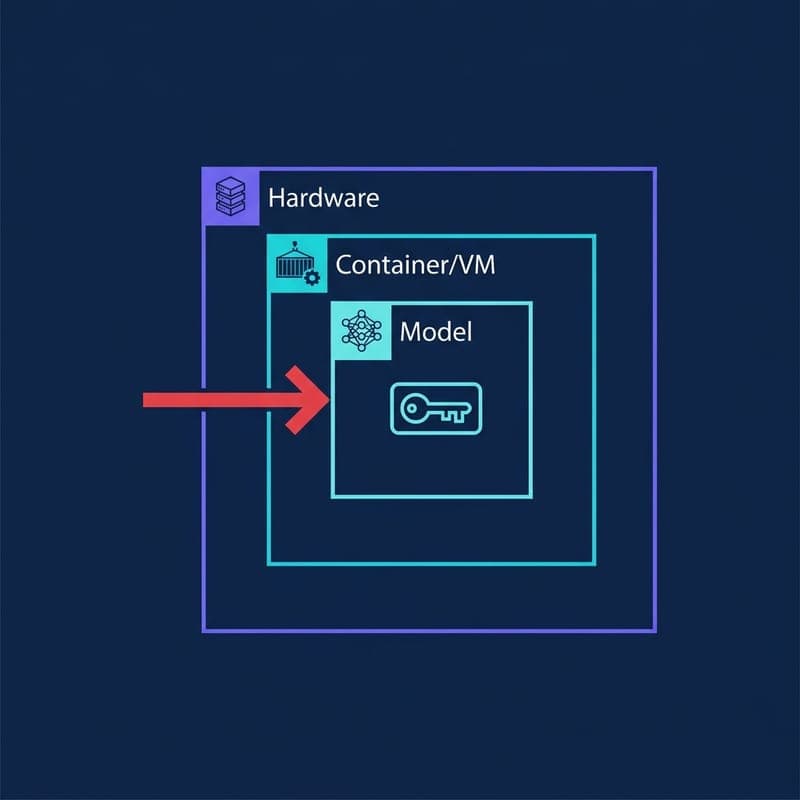
Infrastructure Isolation, Not Model Guardrails, Is Now the AI Security Standard
Google Mantis, Meta Muse, and GPT-6 Astra on Bedrock all treat container, VM, or hardware boundaries — not trained behaviour — as the real security control.
GPT-6 Astra Hits Amazon Bedrock With 1M-Token Context and Critical Security Tier
GPT-6 Astra is now generally available on Amazon Bedrock with a 1M-token context window, chip-level operator isolation, and OpenAI's first Critical cybersecurity classification.
AIR Raises $50M to Continuously Vet AI Agent Skills and Add-Ons
Unit 8200 veterans raise $50M across two seeds to intercept and whitelist the skills, plugins, and MCP servers AI agents load at runtime.