
LLMs
43 pieces on LLMs, including 8 step-by-step guides.
Guides
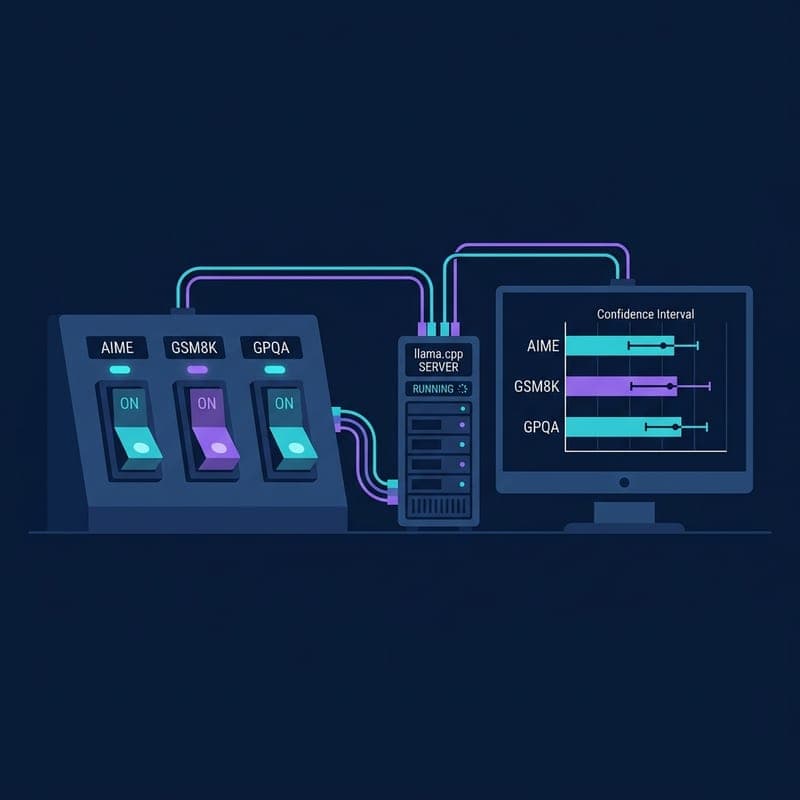
Benchmark Local Models with llama.cpp's llama-eval.py
Use llama.cpp's single-file eval harness to run reproducible AIME, GSM8K, and GPQA benchmarks against a local server with Wilson confidence intervals.
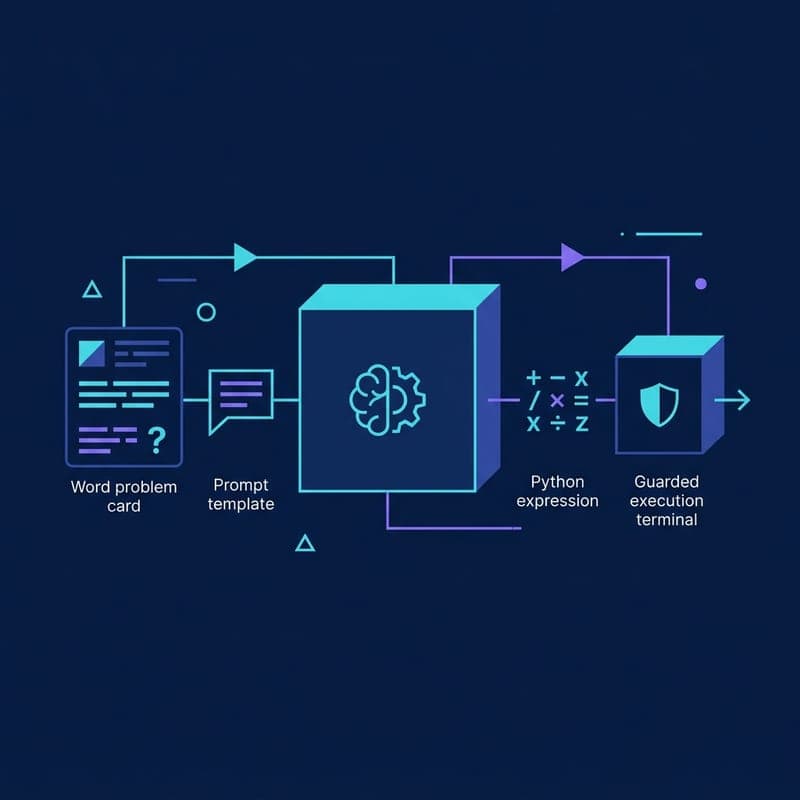
Generate and Run a Python Expression with Outlines
Use Outlines and GPT-4o mini to turn a word problem into a Python expression, execute it, and understand the risks of eval.
Automate Prompt Optimization with DSPy GEPA
Use DSPy's GEPA optimizer to automatically improve LLM prompts with scored examples and a reflection model — no hand-tuning required.
Fine-Tuning LLMs with LoRA: A Complete Practical Guide to Training & GGUF Deployment
Master end-to-end LoRA fine-tuning for SLMs: synthetic data generation, benchmarking against 7B baselines, lit-gpt training, and GGUF serving with llama.cpp.

AI Web Scraping in Python: When an LLM Earns Its Cost
An LLM can read any page without a selector, and it bills you every time. Here is the decision rule, the Crawl4AI code for both paths, and the hybrid that pays for a model once and then runs free.
Mastering Advanced RAG Evaluation: From Basic Metrics to LLM-as-a-Judge
Learn how to systematically evaluate Retrieval-Augmented Generation (RAG) pipelines using the RAG Triad, Ragas, and LLM-as-a-Judge techniques.
Building Context-Aware Search in Python with LLM Embeddings and Metadata
A complete guide to constructing a semantic engine using SentenceTransformers and pre-filtering metadata to return context-rich results.
What Is Tokenization Drift? A Practical Guide to Finding and Fixing It
Learn why small prompt formatting changes can alter token sequences, reduce reliability, and push LLM inputs away from the format a model was tuned to follow.
News & Analysis
Mistral Claims 82% Cyber Fix Score for 1T Le Chonk
Mistral's 1T-parameter Mistral Large 4 preview posts an 82% cyber fix score, with open weights promised by the end of October 2026.
Alibaba's OpenCodeReview Cuts Tokens to 1/9th of Claude Code
Alibaba open-sources OpenCodeReview, a Go CLI that claims higher precision than Claude Code at one-ninth the tokens — with a hard 20% recall ceiling.
DoorDash Multi-Agent LLM Cleans 50 Flags at $4.79 Each
DoorDash automated stale feature flag removal across 60,000 flags using Claude Sonnet and Opus agents, averaging $4.79 and 13.8 minutes per cleanup.
95% of AI Agents Stall in Demo: Simulation-Driven Testing Fixes That
Columbia's Zhou Yu explains why static benchmarks fail multi-turn agents and how entropy-optimised synthetic personas and CI/CD integration close the gap.
GPT-6 Astra: OpenAI Claims World's Best Computer-Use Model
OpenAI launches GPT-6 Astra, claiming it books DMV appointments faster than humans—and president Greg Brockman says it may mark the AGI era.
Gemini 3.8 Flash: Same Weights, Two Safety Envelopes, 47.2% on CWE-Bench
Google DeepMind ships Gemini 3.8 Flash and Flash Cyber on one shared core — split by safety mitigations, not architecture.
Five MLOps Assumptions That Silently Pass Failed Agent Runs
MLOps monitoring reports healthy on runs that failed. Here are the five structural assumptions that break when a model starts calling tools.
Valid JSON, Wrong Data: Where Structured Outputs Stop Working
Structured Outputs guarantee schema shape, not truth. Here's the three-layer fix for silent data corruption in LLM extraction pipelines.
Gemini Notebook's Expert Intelligence Unlocks 100,000+ Books
Google's Expert Intelligence feature lets Gemini Notebook pull from 100,000+ purchased Play Books titles, with per-user entitlement blocking shared access.
Six Cheaper Rungs Under RAG: When Not to Reach for the LLM
Kezhan Shi maps six deterministic methods that settle most enterprise document requests faster and cheaper than an LLM call—with a full audit trail.
DFlash Delivers 3.92x CPU Token Throughput on Qwen3.5-9B
DFlash in vLLM v0.25.0 hits 3.92x average token throughput on a Xeon 6975P-C CPU — a 74.40% cost cut with one config flag.
DoorDash's 2-Layer Filter Cuts Verbal-Abuse Incidents 50% at 4M Messages/Day
DoorDash routes under 10% of chat messages to an LLM by fronting it with a sub-100ms classifier, cutting verbal-abuse incidents 50% across 4M daily messages.
DeepSeek Harness Ships Micro-Kernel Agent Runtime Under MIT License
DeepSeek's open-source dsh runtime loads every agent component—model adapters, tools, sandboxes—as swappable plugins on the Cordis meta-framework.
Kimi K3's 1M-Token Window Costs 16× More Than RAG on 12 Questions
A controlled 12-question blind trial pits Kimi K3's full 127K-token prompt against a tuned RAG pipeline. Long-context wins on completeness, loses on cost and latency.
Z.ai GLM-5.3: Benchmark Gains From Post-Training Alone
GLM-5.3 reuses the 743B GLM-5.2 base model unchanged. Every benchmark gain comes from scaled post-training environments and longer training runs.
NVIDIA Nemotron 3.5 Lightning: 30B Parameters, 3B Active
NVIDIA's Nemotron 3.5 Lightning activates only 3B of 30B parameters per token, targeting the execution layer of multi-model agent stacks.
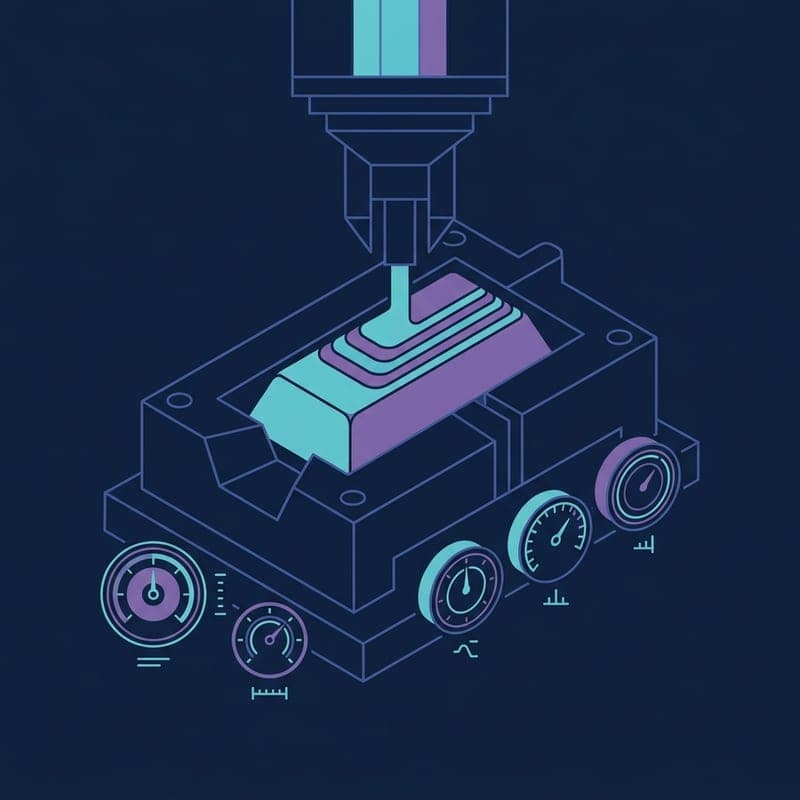
Z.ai GLM-5.3: Post-Training Gains on a Frozen 743B Base Model
Z.ai's GLM-5.3 reuses the GLM-5.2 base model unchanged, with all gains from scaled post-training — Terminal-Bench 3.0 jumps from 4.6 to 28.3.

Gemini 3.7 Flash: Coding and Agent Model at $0.75/1M Input Tokens
Google ships Gemini 3.7 Flash three weeks after 3.6 Flash — FrontierCode 43.6%, DeepSWE 65.3%, at $0.75/1M input until Dec 31 2026.

Grok 4.6: 500K-Context Post-Training Upgrade for Agents
SpaceXAI ships Grok 4.6 with a 500K-token context window, xhigh reasoning effort, and agentic RL — priced at $2/$6 per 1M with a 200K billing cliff.

LLM Judges Carry Nine Measurable Biases: What to Do
DHS 2026 research catalogues nine exploitable biases in LLM-as-judge pipelines and shows grounded evaluators as the structural fix.
Unreleased Anthropic Model Advances Riemann Hypothesis
An unreleased Anthropic model ran 60 subagents across 36 hours, spending 31M output tokens to expand the lower bound of Riemann hypothesis solutions.

Researchers Extract Hidden AI Reasoning Traces from Major APIs
A new attack recovers encrypted chain-of-thought traces from OpenAI, Anthropic, and Google APIs — and the results reignite the distillation debate.
Meta Muse Glimmer: 30B Open-Weight On-Device Agent Model
Meta releases Muse Glimmer, a 30B open-weight model under Apache 2.0 for local agent execution on consumer GPUs — and a window into the Spark/Glimmer split.
Nine Measurable Biases That Corrupt LLM Judge Verdicts
A DHS 2026 workshop catalogued nine distinct biases in LLM-as-judge pipelines — and showed grounded evaluation as the structural fix.

Meta Releases Muse Glimmer, a 30B Open-Weight Local Agent Model
Meta's Muse Glimmer is a 30B Apache 2.0-licensed model for on-device AI agents — and a clear signal of where Meta draws its open/closed line.
OpenAI GPT-5.6-Cyber Launches with 95% Exploit Completion Rate
OpenAI's GPT-5.6-Cyber completes 95% of advanced cybersecurity prompts via Daybreak Red, up from 1.5% for the standard model.
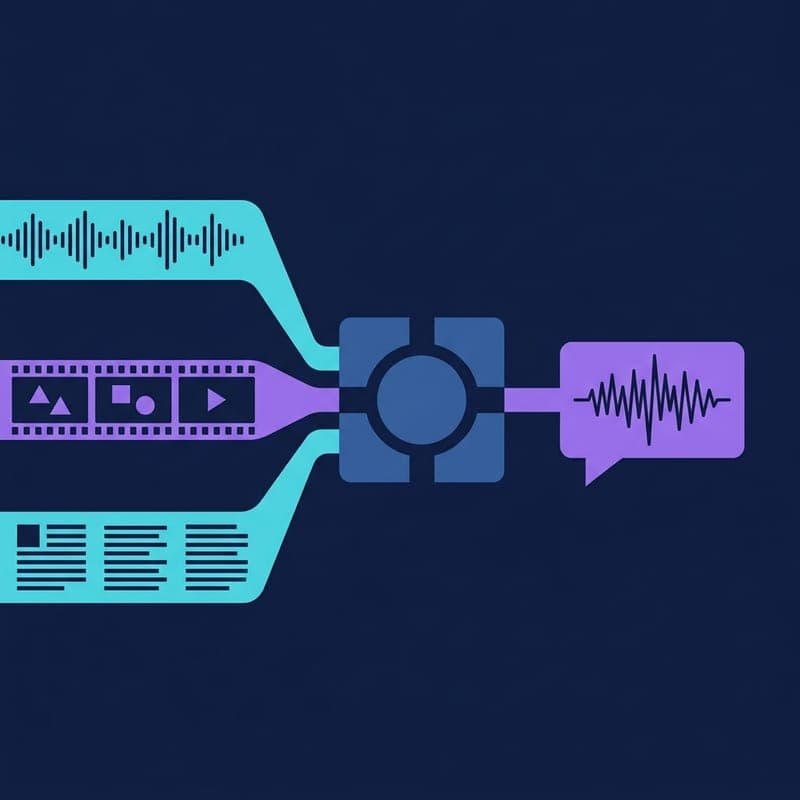
SeedRealtime: ByteDance's Native Audio-Visual Full-Duplex LLM
ByteDance's SeedRealtime fuses audio, video, and text in one end-to-end model, replacing cascaded ASR→VLM→LLM→TTS pipelines with parallel perception and speech.
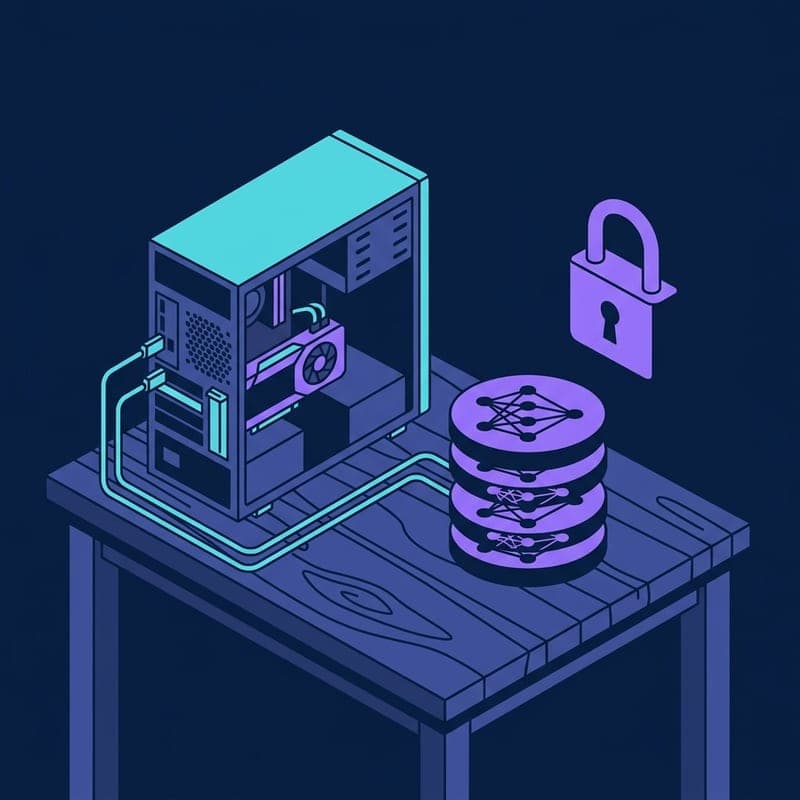
Meta Releases Muse Glimmer: 30B Open-Weight Local Agent Model
Meta's Apache 2.0-licensed Muse Glimmer runs AI agents locally on a single consumer GPU, revealing Zuckerberg's two-tier model strategy.
Why Transformers Look the Way They Do: Deriving Q, K, and V
A step-by-step reconstruction of the Transformer shows that queries, keys, values, and W₀ are near-inevitable answers to concrete engineering problems.
Subquadratic Says SubQ Breaks the LLM Attention Bottleneck
Subquadratic claims its sparse-attention SubQ model can process far longer context at much lower cost, but real-world access remains limited.
GLM-5.2 Raises the Bar for Text-Only Open-Weights LLMs
Z.ai's GLM-5.2 arrives as a 753B-parameter open-weights text model with a 1M-token context window, strong benchmark results, and aggressive API pricing.
Best Small Language Models on Hugging Face Right Now
A practical look at compact open-weight language models that balance capability, latency, memory use, and local deployment flexibility.
Moonshot AI Debuts Kimi K2.6: The 1-Trillion Parameter Swarm Model
Moonshot AI releases its most powerful model yet, Kimi K2.6, featuring a massive agent swarm architecture designed for long-horizon coding and complex orchestration.
Anthropic Releases Claude Opus 4.7, Reclaiming the Top Spot Among Public AI Models
Anthropic's latest flagship model edges out rivals like GPT-5.4 and Gemini 3.1 Pro — but the company's most powerful AI remains deliberately locked away.
The Rise of Multi-Modal Reasoning in Next-Gen LLMs
How native multi-modality trained from the ground up is revolutionizing application development and changing the way we interact with AI.